Tuesday, August 26, 2008
deep and Crisp and even
More exciting news from the world of Crisp - they're making a sequel, An Englishman in New York, which was the title of the second part of Quentin Crisp's memoirs; though I can't hear that phrase without humming the Sting song inspired by it.


Alas and alack
John Coulthart's excellent blog and website have disappeared - temporarily I hope. Oddly though, the RSS feed still seems to be working. I hope this is not a case of ISPs getting prissy and prudish. All URLs under the www.johncoulthart.com domain currently redirect to http://esc01.midphase.com/suspended.page/
Bring it back, bring it back
Don't take it away from me
Because you don't know
What it means to me...
Bring it back, bring it back
Don't take it away from me
Because you don't know
What it means to me...
The Naked Civil Servant
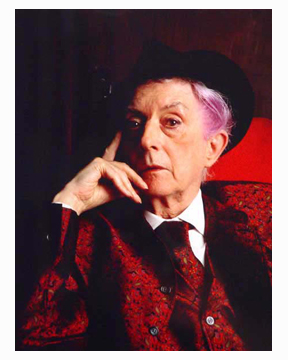
We watched The Naked Civil Servant last night (recorded off the TV a while back), a dramatisation of Quentin Crisp's life made in 1975. Considering that it was made 33 years ago, it really is a classic bit of TV drama. The thing that was the most disturbing about it, however, was the way in which nearly everybody in 1930s England was violently homophobic. Quentin Crisp used to get slapped by passing women in broad daylight. You forget sometimes what really vicious homophobia is like, until it happens - again - to someone you love.
Also shocking were those gays of the 1930s who were so in the closet that Quentin's flamboyant queerness was too much for them; they did not see that he was the future, that he was fighting for the cause of gay liberation by being out, loud and proud. I am glad that he lived to see significant progress in the field of gay rights, and to be honoured for his achievements.
The weirdest bit is at the end, when we arrive at the "present" (1975), and I was so engrossed that I forgot that that was when it was made and therefore it must be the end of the film.
I am more full of admiration for Quentin Crisp than ever.
Monday, August 25, 2008
The moon is my mother. She is not sweet like Mary.
Ah, Sylvia Plath, who fed my adolescent dreams. Fed them with bleeding flowers and old moonlight, mad women and the fear of hospitals. What 1950s melancholy, like an endless Sunday afternoon.
And yet she produced some of the most perfectly Pagan poems...
And yet she produced some of the most perfectly Pagan poems...
FaunI love these two poems; they are part of who I am. I love the colours in them - the dark blue and black of the night, the pale unearthly blue of the saints, the whiteness of the Moon. The arena of yellow eyes; the pale moon-glint and fen-frost in the darkness.
Haunched like a faun, he hooed
From grove of moon-glint and fen-frost
Until all owls in the twigged forest
Flapped black to look and brood
On the call this man made.
No sound but a drunken coot
Lurching home along river bank.
Stars hung water-sunk, so a rank
Of double star-eyes lit
Boughs where those owls sat.
An arena of yellow eyes
Watched the changing shape he cut,
Saw hoof harden from foot, saw sprout
Goat-horns. Marked how god rose
And galloped woodward in that guise.
~ Sylvia Plath
The Moon and the Yew Tree
This is the light of the mind, cold and planetary
The trees of the mind are black. The light is blue.
The grasses unload their griefs on my feet as if I were God
Prickling my ankles and murmuring of their humility
Fumy, spiritous mists inhabit this place.
Separated from my house by a row of headstones.
I simply cannot see where there is to get to.
The moon is no door. It is a face in its own right,
White as a knuckle and terribly upset.
It drags the sea after it like a dark crime; it is quiet
With the O-gape of complete despair. I live here.
Twice on Sunday, the bells startle the sky --
Eight great tongues affirming the Resurrection
At the end, they soberly bong out their names.
The yew tree points up, it has a Gothic shape.
The eyes lift after it and find the moon.
The moon is my mother. She is not sweet like Mary.
Her blue garments unloose small bats and owls.
How I would like to believe in tenderness -
The face of the effigy, gentled by candles,
Bending, on me in particular, its mild eyes.
I have fallen a long way. Clouds are flowering
Blue and mystical over the face of the stars
Inside the church, the saints will all be blue,
Floating on their delicate feet over the cold pews,
Their hands and faces stiff with holiness.
The moon sees nothing of this. She is bald and wild.
And the message of the yew tree is blackness - blackness and silence.
Saturday, August 23, 2008
meal-planning
I decided that I needed to plan meals, so that we wouldn't be eating junk food, and wasting food that we can't work out what to do with.
So I wrote a list of all the meals I would make over a week, using cookery books for inspiration. Then I made a list of all the ingredients we would need, and went to the supermarket (the Co-op) to buy them. I also decided to alternate between vegetarian and omnivore meals.
Definitely enjoying the new system so far. I get less bored of cooking and less frustrated by not having the right ingredients in the cupboard, or wondering what to do with a weird collection of leftovers, and we get a balanced diet.
I also discovered that it's quite difficult to compose photographs of food. However, considering that I took these photos on my mobile, I reckon they're not too bad.
So I wrote a list of all the meals I would make over a week, using cookery books for inspiration. Then I made a list of all the ingredients we would need, and went to the supermarket (the Co-op) to buy them. I also decided to alternate between vegetarian and omnivore meals.
| On the first day of the new regime, I made Moroccan chicken with lemon and olives from a recipe by Nigel Slater. It's very easy - just fry garlic, turmeric and cumin in a pan, add strips of chicken, 100g of chopped green pitted olives, and the juice and zest of 2 lemons. I served it with pitta bread fried in butter, but you can also use pilau rice. The green salad on the side was lettuce, watercress, rocket, spinach, and fennel, dressed with olive oil and lemon juice. Delicious, and it tasted like the dish I had at a Moroccan restaurant recently. |  |
| On the second day, I made stir-fried vegetables. Stir-fry vegetables (ready chopped) from the Co-op, plus sliced chestnut mushrooms, sprouted mixed pulses, chopped root ginger, half a packet of mung-bean sprouts, sliced sugar-snap peas, fried in sesame oil, and glazed with some hoi-sin sauce I had left over from a Chinese takeaway. I forgot to get any noodles, but it was quite filling without them. You definitely need some sort of sauce on it, though, otherwise it's a bit boring. |  |
| On the third day, I made Thai green curry. 2 pieces of haddock, plus 2 sliced courgettes, a packet of Sharwood's Thai Green Curry paste (I don't normally use mixes but this was a good one and you waste less that way), sliced sugar-snap peas (the other half of the packet from yesterday), some fennel, chopped root ginger, lemongrass paste, chopped Savoy cabbage (which might have been a mistake), and some spinach. Served with boiled wholegrain rice. |  |
Definitely enjoying the new system so far. I get less bored of cooking and less frustrated by not having the right ingredients in the cupboard, or wondering what to do with a weird collection of leftovers, and we get a balanced diet.
I also discovered that it's quite difficult to compose photographs of food. However, considering that I took these photos on my mobile, I reckon they're not too bad.
Thursday, August 21, 2008
a little light reading
Four interesting projects....
Peter says:
If I was going to do a Bible-blogging project, I'd start with something as near to the original as I could get: the Hebrew Tanakh in English. Alternatively, I would blog about a book that I might enjoy reading, like the Tao Te Ching or the T’ai Hsüan Ching.
- Badger's Bible Project, in which an atheist reads and comments on the Bible
- Peter on Genesis, in which a Quaker Pagan reads Genesis (not sure if he's going to do the rest).
- Blogging the Bible, in which David Plotz, who is Jewish, finds out what's really in there
- Bill Darlison, a Unitarian minister, also reads the Bible (for the 14th time)
Actually the Flood was caused by Ishtar when she was suffering from PMT. See Tablet 11 of The Epic of Gilgamesh. I am also mystified as to why anyone would worship a being who is described as sending plagues and floods on innocent people. Anyway, it’s all a metaphor…So the Lord said, “I will destroy Man whom I have created from the face of the Earth, both man and beast, creeping thing and birds of the air, for I am sorry I have made them.” - Genesis 6:7
So, God gets pissed at Man and decides not only to kill every single person on the planet (even the newborn babies who are, one would think, blameless), but he also decides to off all the animals. Well, except fish, I would guess. They were probably quite pleased!
Anyhow, flood happens. God has a grand ole time going along undoing everything he did. Is it just me, or does he strike you as a frustrated gamer, always reloading Sims from a save point, after having done horrible things to his Sims?
Peter says:
The Bible was written by writers, and I’ve long felt that much of what those writers wanted to say has been lost, crushed, twisted, and sometimes outright perverted by later so-called “Bible based” traditions. All religious sentiments aside, as a fellow writer I feel it is my calling and my sacred duty to read through the text, not for comfort or for inspiration or for edification, but simply to hear what it is they were trying to say.David says:
This is not a story they taught me at Temple Sinai's Hebrew School in 1980: The founding fathers of the 12 tribes of Israel lie, breach a contract, encourage pagans to convert to Judaism only in order to incapacitate them for slaughter, murder some innocents and enslave others, pillage and profiteer, and then justify it all with an appeal to their sister's defiled honor.Bill says:
I am not against the Bible. I am just against the idea that this book – or any other book, including the Koran or the Book of Mormon or whatever – is a special revelation from God. It is probably the most irrational, dangerous and divisive idea that currently infects the human psyche. And, as Art Lester said to me last month, ‘The book-believers are the ones who will destroy the world.’ Sadly, Art might just be right. And it is our duty to challenge the book-believers, by fostering a new kind of religious consciousness with the contrary message that knowledge and wisdom are the result of human thought, human experience, reflection, reason, scientific endeavour. They do not drop down from heaven fully formed, nor are they are not the preserve of one nation or one religion or one period in history. And they are certainly not to be found in one book. To suggest that they are is to turn works of literature into loaded guns.Bill is the author of The Gospel and the Zodiac, which puts forward the idea that the Jesus mythos was originally an initiatory mystery based on the symbolism of the Zodiac. Neat idea.
If I was going to do a Bible-blogging project, I'd start with something as near to the original as I could get: the Hebrew Tanakh in English. Alternatively, I would blog about a book that I might enjoy reading, like the Tao Te Ching or the T’ai Hsüan Ching.
Tuesday, August 19, 2008
Badgers saved!
Great news:
The full text of Mr Benn’s statement can be found on the Defra website at:
http://www.defra.gov.uk/corporate/ministers/statements/hb080707.htm
Yay!!! I am really pleased about this.
On 7 July the Secretary of State announced Defra’s policy will be not to issue any licences to farmers to cull badgers to prevent bovine TB. The Secretary of State has decided that we need to put our effort into strengthening our programme of research to develop cattle and badger vaccines and plan for their deployment. £20 million will be invested over the next three years in developing usable cattle and badger vaccines.(response from the government to a Save the Badgers petition)
The full text of Mr Benn’s statement can be found on the Defra website at:
http://www.defra.gov.uk/corporate/ministers/statements/hb080707.htm
Yay!!! I am really pleased about this.
Friday, August 15, 2008
torch songs
A discussion about music over at The Expulsion of the Blatant Beast led me to think about my repertoire of songs that I like to sing, and what they might have in common. Usually they're in a minor key (as far as I can tell, since I don't really understand about keys and modes and stuff) and about something sad and yearning....
- Nanna's Lied (Kurt Weill) - lyrics
- Flower of Scotland
- Je ne t'aime pas (Kurt Weill, Maurice Magre) - lyrics
- The Curragh of Kildare
- Waly waly
Tuesday, August 12, 2008
annoying
According to the quiz at Am I Annoying.com, I am moderately annoying (hurrah! I wouldn't want to be completely bland)
You can also vote there for the annoyingness of celebrities. Alas, Trinny and Susannah (two of the most annoying celebrities on the planet) are not on there. They do have historical figures on there, though; for instance I just voted the Emperor Constantine as annoying for embracing Christianity and making it the state religion of the Roman Empire when it was much better as a rather subversive non-statist little cult. You can also find new people to get annoyed about that you'd never even heard of, like Charles Taze Russell, founder of the Jehovah's Witnesses. Just for balance, I also voted Richard Dawkins annoying. It's a pity it's just a straight choice between annoying, not and don't care, as for some people (like Constantine, and Henry VIII) I'd like to rate them as extra annoying. Humph, Henry VIII isn't on there, but both his daughters and his dad are. I'm annoyed with his brother as well, for dying young and letting Henry VIII get the throne. He caught a chill in Ludlow Castle, or something. I once had the satisfaction of going up to his tomb and telling him that I was annoyed with him for dying early.
You can also vote there for the annoyingness of celebrities. Alas, Trinny and Susannah (two of the most annoying celebrities on the planet) are not on there. They do have historical figures on there, though; for instance I just voted the Emperor Constantine as annoying for embracing Christianity and making it the state religion of the Roman Empire when it was much better as a rather subversive non-statist little cult. You can also find new people to get annoyed about that you'd never even heard of, like Charles Taze Russell, founder of the Jehovah's Witnesses. Just for balance, I also voted Richard Dawkins annoying. It's a pity it's just a straight choice between annoying, not and don't care, as for some people (like Constantine, and Henry VIII) I'd like to rate them as extra annoying. Humph, Henry VIII isn't on there, but both his daughters and his dad are. I'm annoyed with his brother as well, for dying young and letting Henry VIII get the throne. He caught a chill in Ludlow Castle, or something. I once had the satisfaction of going up to his tomb and telling him that I was annoyed with him for dying early.
Friday, August 01, 2008
Chicken Run

There's a lovely story on the BBC website about the Battery Hen Welfare Trust, which re-homes retired battery chickens:
It's cheaper for the farmers to give the hens to the trust than to send them off for slaughter, apparently.Despite spending most of their life four to a cage, it does not take long to adapt - almost immediately they start stretching their wings and scratching at the soil.
Some take dust baths - something they have never been able to do. Nature kicks in and they fluff up feathers so the soil can cleanse and cool them.
 But most farmers are not being deliberately cruel:
Setting up free range systems requires investment of tens of thousands of pounds. Farmers need to know we will support them and that we will not abandon them in favour of cheap foreign imports where regulations and constraints are often lighter, making the egg cheaper.If you want to re-home some hens, visit the Battery Hen Welfare Trust website now.
If you can't adopt a hen, make sure you buy free-range eggs and products made from free-range eggs.
mermen
John Coulthart asks, where have all the mermen gone?
Apparently all mermen are Asian. Either that or they look like Clark Kent underwater.
This one is quite sweet in a faintly Pauline Baynes kind of way but he seems to have a bit of a problem finding his assets.
There’s a faintly Victorian one here, but it’s by David Delamare, 2001.
I guess there’s no Victorian ones because neither Simeon Solomon nor the women Pre-Raphaelites and Symbolists turned their hands to the subject.
There are some depictions of mermen in Wikimedia Commons. There's also a weird cryptozoological specimen (warning: disturbing photo of dead merman) but it looks as if it's made of papier-mâché to me, or perhaps photoshopped.

Monday, July 28, 2008
sculpture on show
 If you're down in Devon in September, don't miss Devon Open Studios, 10.30 am - 4.30 pm, 6th, 7th and 8th September 2008.
Peter Randall-Page is participating. I wish I could be in Devon in September, as I would love to see some of his sculptures 'in the flesh' so to speak. He is part of the West Devon trail (trail 2), guides to which can be downloaded from the Devon Artist Network (pdf).
I've been aware of his work since the late eighties, when I had a postcard of one of his sculptures on my wall.
His more recent work is even more exciting - it's so organic. It reminds me of some of Andy Goldsworthy's stuff, or Chris Hill's. I really like work that seems to reveal the hidden secrets of nature, like fractals, spirals, and the shape of rocks. Anyway, go and check out his website and admire it for yourself.
Sunday, July 27, 2008
the art of suicide
 It has always amazed me that some art apparently has the power to suggest suicide to people. Goethe's novella Die Leiden des Jungen Werthers apparently caused many suicides among German youth, who dressed themselves in the style of the hero and even had the same book beside them when they committed suicide.
Similarly, the Hungarian song Szomorú vasárnap (Gloomy Sunday) apparently has the power to suggest suicide to those who listen to it, according to Curious Expeditions:
Hauntingly beautiful, the story goes that the song was so sad, so depressing, so completely soul crushing, that upon hearing it even once, Hungarians were driven to suicide. And not just a few, during its era, hundreds of suicides were attributed to the melody.Billie Holliday also recorded a version, which is certainly very sad and gloomy (but then so are most of her songs).
Then of course there are all the novels about suicide: The Virgin Suicides by Jeffrey Eugenides; A Long Way Down by Nick Hornby; Suicide Wall by Alexander Paul.
Chris Power in The Guardian blog further explores the theme of literary suicide. Both Schopenhauer and Donne defended it, and Plutarch considered Cato the Younger's suicide a noble death. The Romantics lauded the death of Chatterton as 'the apotheosis of artistic sensibility'.
There is also a tradition in Japan of writing haiku before committing suicide (and also before a natural death):
In a full ceremonial seppuku (Japanese ritual suicide) one of the elements of the ritual is the writing of a death poem. The poem is written in the tanka style (five units long which are usually composed of five, seven, five, seven, and seven syllables). Asano Naganori, the daimyo whose suicide the forty-seven ronin avenged, wrote a death poem in which commentators see the immaturity and lack of character that led to him being ordered to commit seppuku in the first place.Oddly, different countries have different suicide rates, which remain fairly constant, perhaps because of varying cultural attitudes to suicide. Hungary is number 5 on the list.
Goths are also fascinated with death and gloom, as this song by Emilie Autumn, The Art of Suicide, illustrates. They also love death in general; Chas Clifton recently spotted a Gothic Book of the Dead, which offers advice on:
Meditating on gravestone sculptures, creating a necromantic medicine bag, keeping a personal book of the dead, and other exercises will help you explore the vital, transformative forces of death.Chas declares himself no longer entranced by death, having experienced too much of it lately. I agree - life is too full of joy and complexity and love - but it's a curious pleasure to wallow in melancholy sometimes.
She dwells with Beauty—Beauty that must die;... as Keats so eloquently expressed it in his Ode on Melancholy.
And Joy, whose hand is ever at his lips
Bidding adieu; and aching Pleasure nigh,
Turning to poison while the bee-mouth sips:
Ay, in the very temple of Delight
Veil’d Melancholy has her sovran shrine,
Though seen of none save him whose strenuous tongue
Can burst Joy’s grape against his palate fine;
His soul shall taste the sadness of her might,
And be among her cloudy trophies hung.
Suicide is always a tragedy, and leaves heartbreak in its wake. But its cultural aspects are very interesting.
Subscribe to:
Posts (Atom)